
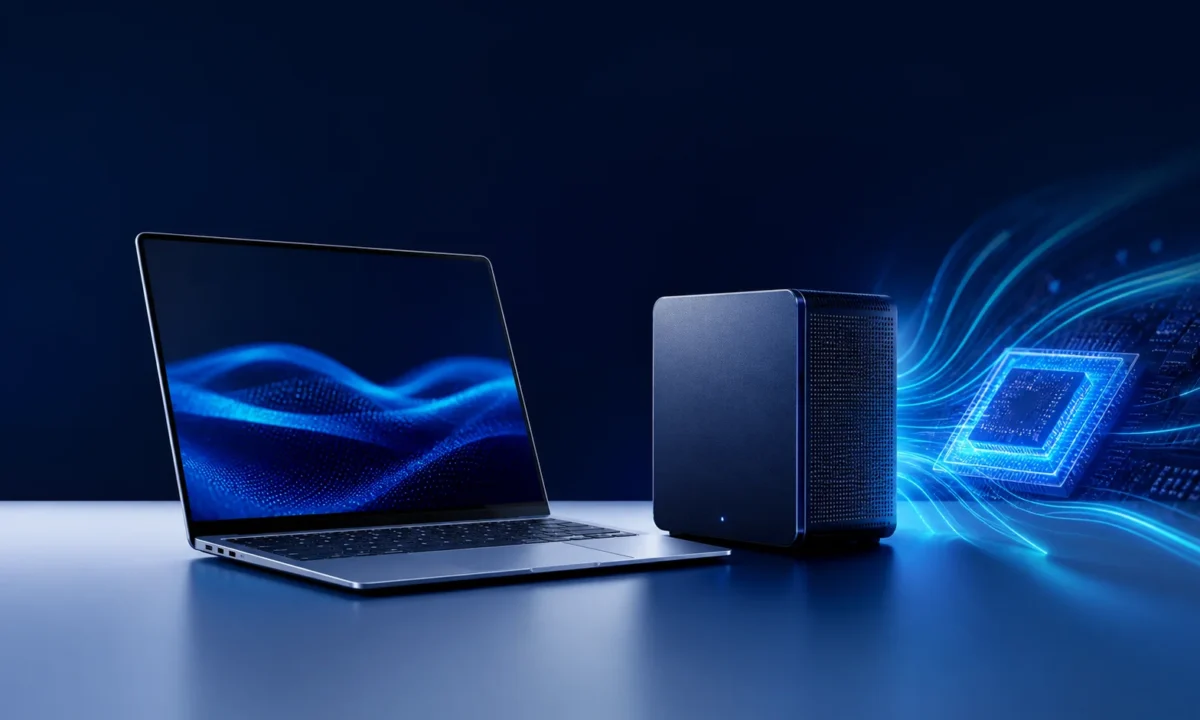
In short: how to choose a laptop is decided by three things a spec sheet barely covers — the keyboard, the screen and how much heat the chassis can shed. Everything specified in gigahertz can be upgraded or worked around; the parts you touch cannot. Decide your weight ceiling and battery requirement first, then buy the best screen and keyboard inside it.
How to choose a laptop punishes spec-sheet shopping more than any other category, because a laptop is a thermal compromise wearing a specification. Two machines with identical processors can differ enormously in sustained performance depending on how much heat their chassis can move, and that figure is never printed.
How we approached this
This is a decision framework. RankBoast has not tested laptops and publishes no measurements — see our review methodology. For sustained-performance and battery testing, consult a lab that runs them.
Start with weight and battery, not the processor
How to choose a laptop starts with constraints, because a laptop is defined by them. Decide two numbers before looking at any product: the heaviest machine you will actually carry every day, and the hours away from power you genuinely need. These bound the market far more usefully than any component preference.
Under roughly 1.4kg you are buying a thin machine with modest sustained performance. Around 1.8kg you can have real cooling. Above 2.2kg you have a portable desktop that lives on a desk and moves occasionally. None is better; they are different products, and knowing which one you need is most of how to choose a laptop.
How to choose a laptop for sustained performance
The processor sets the ceiling; the cooling decides how long you stay near it. A thin chassis will run fast for a short burst, then reduce clocks to stay within its thermal budget. For bursty work — documents, browsing, short edits — that is fine. For a long export, a compile or a gaming session, the thicker machine with the same chip will finish first.
The specification sheet will not tell you this. Reviews that run sustained tests will, and it is the single most useful thing to look for when comparing two similar machines.
The screen and keyboard are the machine
You interact with these for every hour of the laptop’s life, and neither can be upgraded.
- Brightness matters more than resolution. A dim panel is unusable near a window; a 1080p panel at 400 nits beats a dim 4K one for real work.
- Matte or glossy is a room decision. Glossy looks better in a shop and worse under an office light.
- Higher resolution costs battery. On a 13-inch screen the benefit over 1080p is smaller than the power cost.
- Type on the keyboard before buying if you possibly can. Key travel and layout quirks — a half-height arrow cluster, a displaced right shift — are things you will notice daily for years.
What you can change later, and what you cannot
| Component | Usually upgradable? | Implication |
|---|---|---|
| Memory | Increasingly soldered | Check. If soldered, buy 32GB now — memory prices have risen sharply. |
| Storage | Often a replaceable M.2 drive | Buying the base capacity and upgrading yourself is usually cheaper. |
| Battery | Serviceable, rarely by the owner | Check the service cost before buying. |
| Screen, keyboard, chassis | No | These decide satisfaction. Spend here. |
Because memory is frequently soldered and DDR5 prices have roughly doubled since late 2025 — see our memory guide — the memory configuration you order is often permanent and unusually expensive to get wrong.
Ports and charging
Count the ports you use simultaneously today, then check the machine has them or that one dock covers the gap. Confirm the laptop charges over USB-C if you want a single-cable desk setup, and check the wattage a charger must supply — a machine that charges slowly from a small adapter under load is a machine that runs its battery down while plugged in.
Common mistakes
Buying a thin chassis for sustained work. The chip will throttle and the fan will be loud.
Choosing resolution over brightness. Brightness is what makes a screen usable.
Assuming memory is upgradable. Verify per model, not per brand.
Never trying the keyboard. The one component you touch constantly and cannot change.
Buying more machine than you carry. The best laptop is the one that comes with you.
Who should choose what
- Students and writers: 1.2–1.4kg, bright matte screen, long battery, good keyboard. Processor is secondary.
- Developers: 32GB if soldered, fast storage, and a chassis that sustains load through a compile.
- Creative work: color-accurate bright screen, real cooling, and accept the weight.
- Gaming: a thicker chassis, and expect noise. Check sustained rather than peak performance.
- Occasional home use: a mid-range machine with a good screen; do not pay for performance that idles.
Verdict
Set your weight and battery limits, then inside those limits buy the brightest screen and the best keyboard you can, with memory specified high if it is soldered. Approached that way, how to choose a laptop becomes a short list of physical judgements rather than a comparison of numbers that mostly will not predict your experience.
What we would need to test to say more
Recommending named laptops would require sustained-load testing to observe throttling, calibrated screen measurement, standardised battery testing at fixed brightness, and acoustic measurement under load. We have not done that. This guide frames the decision.
Sources and methodology
Component price context is from Tom’s Hardware’s continuously updated trackers, retrieved August 2026. RankBoast has not tested the hardware discussed here and received no samples. Research and drafting were AI-assisted, and any specification you rely on should be confirmed against the manufacturer. Errors are handled under our corrections policy.
Source links
Join the discussion
Add useful context, ask a focused question or share relevant experience. Comments are moderated to protect readers from spam and promotional links.
Leave a thoughtful comment