
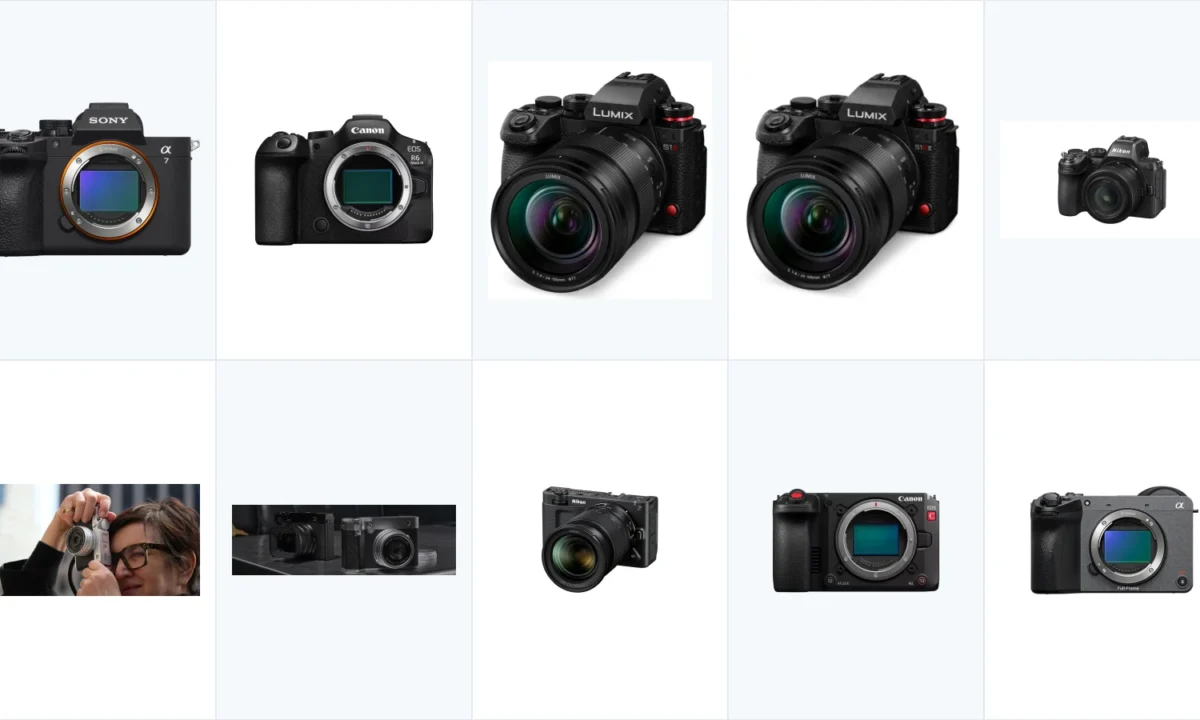
Quick verdict
There is no single best camera here. Sony a7 V and Canon EOS R6 Mark III are the strongest broad hybrids; Panasonic S1RII favors high-resolution hybrid work; Nikon Z5II is the accessible full-frame choice; and Canon C50 or Nikon ZR better suit cinema-first production.
The latest cameras for 2026 are not automatically the best cameras for 2026. Every body below is separated from the others by mode-specific tradeoffs — readout speed, codec, cooling, card bandwidth — rather than by a single ranking, so the useful question is which compromise suits your work.
On this page
This comparison covers ten notable cameras announced in 2025 or 2026 and available in current professional or enthusiast workflows. Treat it as a map of the latest cameras for 2026 rather than a ranking of them. “Latest” does not mean automatically better: the list favors models with official specifications and meaningful independent evidence, which is the only defensible way to shortlist the latest cameras for 2026. RankBoast has not handled or laboratory-tested these bodies, so every claim about the latest cameras for 2026 below traces to a manufacturer specification or a published independent lab test.
Technical comparison
| Camera | Sensor / resolution | Max still burst* | Key video mode | IBIS | Best fit |
|---|---|---|---|---|---|
| Sony a7 V | Full-frame, partially stacked, 33MP | 30 fps electronic | 4K120p in APS-C; 10-bit 4:2:2 | Yes, rated 7.5 stops center | Balanced hybrid, action |
| Canon EOS R6 Mark III | Full-frame, 32.5MP | 40 fps electronic; 12 fps mechanical | 7K RAW / open gate; 4K120p | Yes | Sports and hybrid |
| Panasonic Lumix S1II | Full-frame, partially stacked, 24.1MP | 70 fps electronic; about 10 fps mechanical | 5.8K ProRes RAW; 4K120p | Yes | Motion and cinema hybrid |
| Panasonic Lumix S1RII | Full-frame BSI, 44.3MP | 40 fps electronic; about 10 fps mechanical | 8K30p; internal 5.8K ProRes RAW | Yes, rated 8 stops center | Studio, landscape, hybrid |
| Nikon Z5II | Full-frame BSI, 24.5MP | Up to 15 fps; 30 fps JPEG mode | 4K60p; internal N-RAW up to 4K30p | Yes, rated 7.5 stops center | First full-frame system |
| Fujifilm X-E5 | APS-C X-Trans, 40.2MP | 20 fps electronic with crop | 6.2K30p; 4K60p 10-bit | Yes | Travel and everyday stills |
| Fujifilm GFX100RF | 43.8 × 32.9mm, 102MP | 6 fps | 4K30p | No | High-detail travel and landscape |
| Nikon ZR | Full-frame, 24.5MP | Cinema-first body | 6K60p R3D NE; 4K120p crop | Yes | Compact RAW cinema |
| Canon EOS C50 | Full-frame 7K, about 32MP photo mode | Cinema-first body | 7K60p Cinema RAW Light; 7K30p open gate | No sensor-shift IBIS | Production cinema |
| Sony FX2 | Full-frame, 33MP | 10 fps stills | Oversampled 4K; 4K60p APS-C | Yes | Small Sony cinema rig |
*Manufacturer maximums can require electronic shutters, specific file types, lenses, cards, batteries or crops. Compare buffer depth, flicker behavior and rolling shutter before relying on a headline frame rate.
Official product image gallery
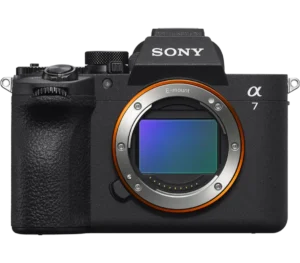
Official Sony source
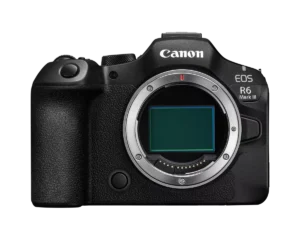
Official Canon source
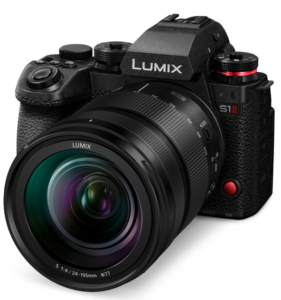
Official Panasonic source
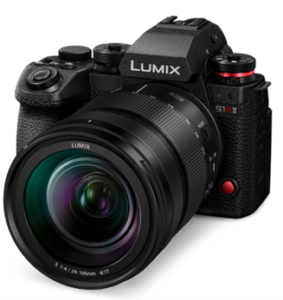
Official Panasonic source
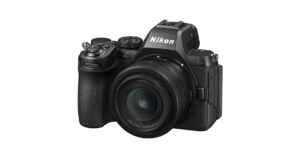
Official Nikon source

Official Fujifilm source
Official Fujifilm source
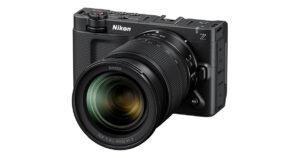
Official Nikon source
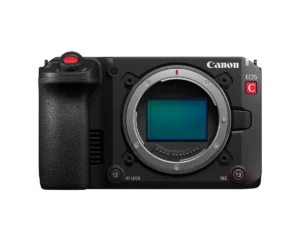
Official Canon source
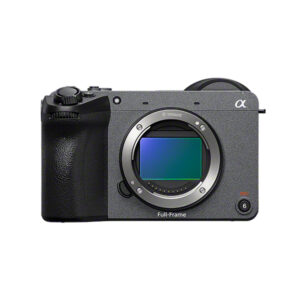
Official Sony source
Independent performance evidence
| Model | Independent finding | What it means |
|---|---|---|
| Sony a7 V | CineD measured 14.5ms rolling shutter in full-frame 4K25p, 12.4 stops at SNR 2 and nine stops of exposure latitude. | Strong video image pipeline; readout is good, not class-leading. |
| Panasonic S1II | CineD’s later DR Boost test found ten usable stops of exposure latitude with room toward eleven in internal ProRes RAW; DR Boost increases readout time. | Excellent grading latitude when motion skew is controlled. |
| Panasonic S1RII | CineD measured about 12 stops at SNR 2 and nine stops of latitude, but 29.3ms rolling shutter in 8K with expansion on; 5.8K/4K60p was about 14.1ms. | Choose recording mode based on detail versus motion. |
| Sony FX2 | CineD measured 27.5ms rolling shutter in full-frame 4K and 12.8ms in APS-C, with 12.4 stops at SNR 2. | Full-frame motion can skew; crop mode reads much faster. |
| Nikon Z5II | DPReview awarded 91% in its published review listing. | A strong all-round entry full-frame result, but not a sports flagship. |
| Panasonic S1RII | DPReview awarded 91% and highlighted high-resolution stills and extensive hybrid features. | Broad capability with mode-specific video tradeoffs. |
| Fujifilm X-E5 | DPReview’s published review listing reports 85%. | Capable compact photography body; value and ergonomics remain personal. |
Best camera by use case
- Broad photography and video: Sony a7 V for balanced speed, resolution and independent video results.
- Sports: Canon EOS R6 Mark III for 40 fps electronic bursts, pre-capture and deep hybrid specifications. Lens choice and stadium flicker still matter.
- High-resolution photography: Panasonic S1RII for an interchangeable system, or GFX100RF when a fixed 28mm-equivalent lens suits the assignment.
- Cinematic video: Canon C50 for 7K RAW and production connections; Nikon ZR for compact R3D NE and 32-bit float audio.
- Student: Nikon Z5II when full-frame is justified; a less expensive APS-C body and better lens can be the wiser total kit.
- Everyday carry: Fujifilm X-E5 for compact interchangeable-lens shooting.
How we reached these recommendations
Specifications came from current manufacturer manuals, support pages and announcements. Independent evidence came from CineD’s standardized video lab and DPReview’s reviews and published ratings. The sources use different methods, so numbers are never combined into a made-up universal score. Prices are excluded because they change by country and promotion.
Image quality also depends on the lens, light, exposure, processing and photographer. Before buying, rent the body with the intended lens, test autofocus on the actual subject, record for the required duration and process the files on the real computer.
Why newest is not best
Release date correlates weakly with suitability, and there are three specific reasons a list of the latest cameras for 2026 should not be read as a ranking.
New bodies ship with immature firmware. Autofocus behavior, codec options and stabilization tuning all improve over the first year through updates. A camera eighteen months old is frequently a better version of itself than it was at launch, while a camera released last month has not yet had that work done.
Lens and accessory ecosystems lag the body. A new mount or a new media format means fewer affordable lenses, fewer third-party options and a thinner used market. That cost lands on you rather than on the manufacturer.
Independent measurement takes time. The standardized lab tests that make bodies genuinely comparable — readout timing, latitude, sustained buffer depth — appear weeks or months after launch. Buying at announcement means buying before the evidence exists.
The counterweight is real too: genuinely new sensor architectures and codecs do appear, and when a body brings a faster readout or internal RAW that its predecessor lacked, that is not incremental. The discipline is to identify which of the two situations you are in before paying launch price.
A practical filter: if the specification that improved is one you can name and measure in your own work, buy new. If you cannot name it, buy the previous generation at a discount and put the difference into a lens. Most buyers researching the latest cameras for 2026 land in that second category.
Sources and methodology
Every model is linked below to official specifications and at least one independent evidence source where a suitable test was available. Manufacturer dynamic-range and stabilization figures remain manufacturer claims unless an independent measurement is explicitly identified.
Source links
- Sony official specifications
- CineD independent lab test
- Canon official specifications
- cam.start.canon
- Panasonic official specifications
- CineD independent lab test
- Panasonic official specifications
- CineD independent lab test
- Nikon official specifications
- DPReview independent review
- Fujifilm official specifications
- DPReview independent review
- Fujifilm official specifications
- DPReview independent review
- Nikon official specifications
- CineD independent lab test
- Canon official specifications
- CineD independent lab test
- Sony official specifications
- CineD independent lab test
Join the discussion
Add useful context, ask a focused question or share relevant experience. Comments are moderated to protect readers from spam and promotional links.
Leave a thoughtful comment