
Quick verdict
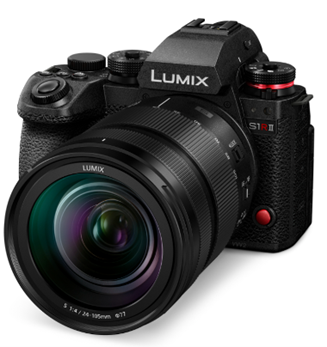
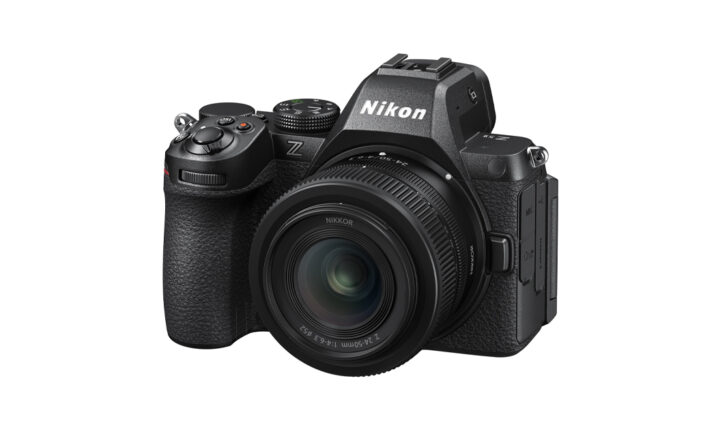
Sony a7 V is the most balanced general-photography hybrid here. Panasonic S1RII favors detail and studio work; GFX100RF is a specialized fixed-lens high-resolution tool; Nikon Z5II offers the most accessible full-frame path.
Choosing among cameras for photography is a resolution-and-lens decision before it is a body decision. A 33MP file prints about 23 inches wide at 300 ppi; a 24MP file prints about 20. Almost nobody needs more than that, which is why autofocus, card redundancy and lens availability decide assignments instead.
On this page
A still-photography body should be selected with its lens and output in mind. Resolution is valuable for large prints and cropping, but autofocus, handling, flash support, card redundancy and lens availability often decide whether an assignment succeeds.
Technical shortlist
| Model | Resolution | System | Strength | Limitation |
|---|---|---|---|---|
| Sony a7 V | 33MP full frame | Sony E | Balanced detail, 30 fps and mature lens range | Electronic-shutter motion behavior still needs testing |
| Panasonic S1RII | 44.3MP full frame; 177MP multi-shot mode | L mount | Studio detail, tethering and hybrid recording | High-resolution video modes can read slowly |
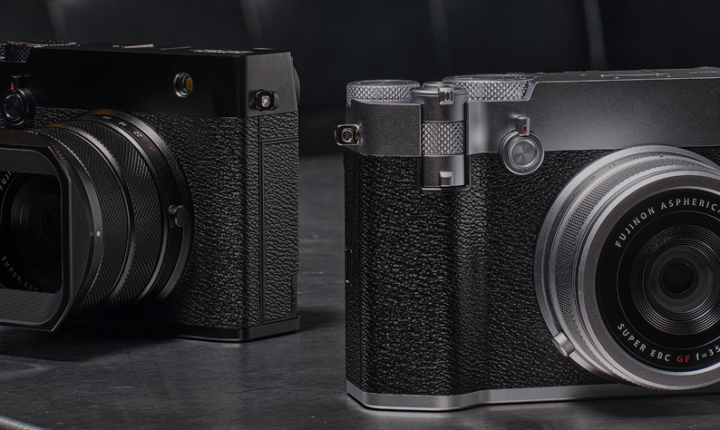
| Fujifilm GFX100RF | 102MP 44×33mm | Fixed 35mm f/4, 28mm equivalent | Exceptional cropping and landscape detail in one body | No IBIS and no lens change |
| Nikon Z5II | 24.5MP full frame | Nikon Z | IBIS, dual UHS-II slots and accessible full-frame kit | Less burst headroom than action-focused bodies |
Match the camera to the subject
For portraits, price the preferred 50mm or 85mm lens with the body. For architecture and products, consider tethering, flash triggering, perspective-control options and color workflow. For landscapes, weather protection, tripod usability and lens corner performance matter at least as much as sensor size.
What independent testing adds
DPReview’s published listings give both the Nikon Z5II and Panasonic S1RII 91%, while its standardized scene permits like-for-like file inspection. Use those files to compare the ISO and processing range relevant to you rather than treating an overall percentage as universal truth.
Resolution is a print and crop decision
Megapixels are easiest to reason about once converted into inches. At 300 pixels per inch — the conventional standard for a print viewed close up — the arithmetic is direct:
| Sensor | Pixel dimensions | Print at 300 ppi |
|---|---|---|
| 24.5MP (Nikon Z5II) | ~6048 × 4032 | ~20 × 13 in |
| 33MP (Sony a7 V) | ~7008 × 4672 | ~23 × 16 in |
| 44.3MP (Panasonic S1RII) | ~8128 × 5424 | ~27 × 18 in |
| 102MP (Fujifilm GFX100RF) | ~11648 × 8736 | ~39 × 29 in |
Two consequences follow. First, a 24MP file already exceeds what most people ever print, so resolution beyond that is bought for a different reason. Second, that reason is usually cropping — and cropping consumes pixels quadratically. Halving each linear dimension of the frame leaves a quarter of the pixels, so a 102MP file cropped to half its width and half its height still yields roughly 25MP, while a 24MP file cropped the same way yields about 6MP.
That is the honest case for high resolution among cameras for photography: it is a reframing budget. If you shoot wildlife or sports where you cannot always fill the frame, it is genuinely valuable. If you compose deliberately with the right lens, it mostly costs you storage and slower file handling.
The lens budget usually exceeds the body
Lenses outlive bodies by a wide margin and cost more in aggregate. A working two-lens or three-lens kit frequently exceeds the price of the camera it mounts to, and those lenses carry across two or three body generations while the body depreciates.
So price the system, not the camera. Pick the two focal lengths you will actually use most, look up their current cost in each mount you are considering, and compare those totals. Among cameras for photography, a body that is marginally better on a mount lacking an affordable version of the lens you need is the worse purchase, and this is the single most common error people make when comparing cameras for photography across brands.
Weight belongs in the same calculation. Full-frame fast primes are heavy, and a kit you leave at home because of its mass produces no photographs at all. Add up the grams of the body plus the lenses you intend to carry before deciding a system is right for you.
The specs that decide assignments
These rarely appear in headline comparisons and routinely decide whether paid work succeeds.
- Dual card slots. Two cards writing simultaneously means a card failure loses nothing. For weddings, events and anything unrepeatable, treat this as mandatory rather than a preference.
- Flash sync and trigger support. If you use strobes, confirm the maximum sync speed and that your trigger system is supported before buying.
- Tethering. Studio and product work depends on it, and reliability varies substantially between manufacturers’ software.
- Battery capacity and charging. Count shots per charge for the way you actually work, and check whether the body charges over USB-C, which removes a charger from the bag.
- Weather sealing. Not a specification with an industry standard, so look for evidence from photographers working in rain rather than a marketing claim.
- Buffer and card speed. Relevant even outside sports, because a slow buffer interrupts a portrait session at the worst moment.
Work through that list against your actual assignments and the shortlist above usually reorders itself, because the body with the best sensor is not always the body with two card slots. That is the recurring lesson in comparing cameras for photography: the deciding specification is rarely the advertised one.
Sources and methodology
Selections combine official specifications with DPReview evidence. RankBoast did not test these bodies. Rent before changing systems, and compare total kit weight and lens cost.
Source links
Join the discussion
Add useful context, ask a focused question or share relevant experience. Comments are moderated to protect readers from spam and promotional links.
Leave a thoughtful comment